
Amazon’s AI Image Policy in 2026: Which Product Photos Need the AI Label—and Which Don’t
Amazon now requires a contains-synthetic-performer tag on certain listing images featuring AI-generated people. Here is the practical answer: which product photos need it, which do not, and how to handle the grey zone nobody has resolved.

If your Amazon image contains a photorealistic person generated entirely by AI, tag it before upload. Product-only images, illustrations, and photographs of real people that were simply edited with AI do not require Amazon’s synthetic-performer tag. For generated hands, ears, feet, or other partial figures, the safest choice is to tag until Amazon publishes clearer guidance.
Which Amazon product photos need the AI label?
| Your image | Amazon tag? |
|---|---|
| Product only—flat lay, white background, no people | No |
| Real child model, photographed, then AI-retouched or background-swapped | No |
| Illustration or cartoon character | No |
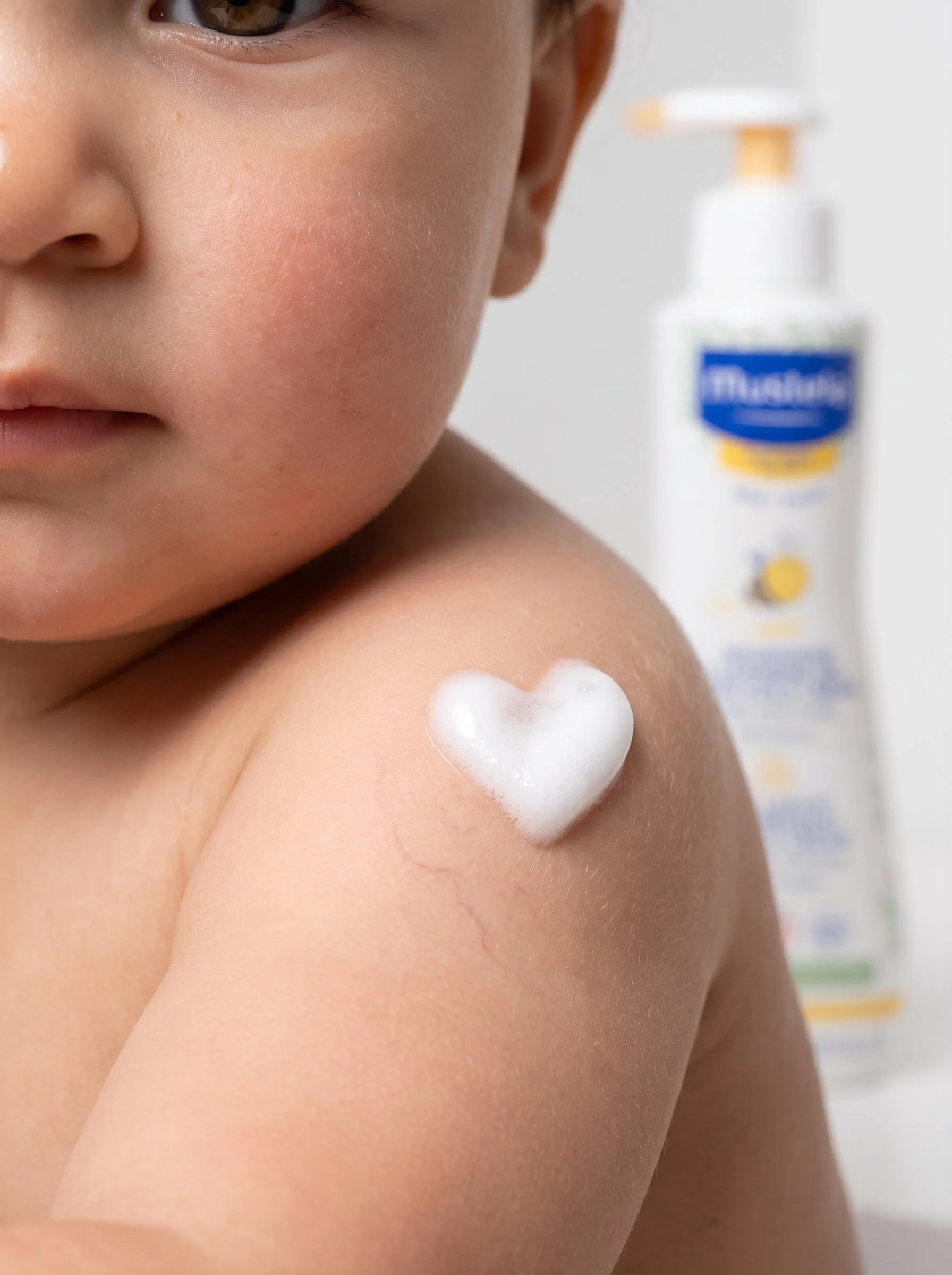
| Fully AI-generated child, photorealistic, face visible | Yes |
| Fully AI-generated adult holding your product | Yes |
| AI-generated hand, ear, wrist, or foot—no face or whole person | Unresolved. Safest choice: tag it. |
If you landed on “yes,” the fix takes about thirty seconds per file: write the exact keyword contains-synthetic-performer into the image’s XMP subject field before you upload. Amazon writes the shopper-facing disclosure itself.
Two things people get wrong about the downside: the fine and the platform consequence are not alternatives—one untagged asset can cost you the listing, the ad spend, and the money. And there is no evidence that disclosure hurts conversion; what hurts conversion is a photo that does not match the box that arrives.
The grey zone: a generated ear wearing your earring
Here is the case none of the four rules answers cleanly, and it is common in baby and kids categories.
You sell tiny stud earrings. The shot is a close crop: an ear, part of a cheek, a bit of hair. Everything in frame is generated from scratch. No face, no identity, no whole person—just a fragment of a body rendered by a model.
Does it need the tag?
The definitions do not resolve it. Amazon’s requirement is written around a photorealistic person generated by AI. New York’s law turns on an asset intended to create the impression of a human performer. Both assume something you can look at and read as a person. A disembodied ear is not obviously a person. It is also not obviously not one.
The same ambiguity covers a generated hand holding a bottle, a wrist wearing a bracelet, a foot in a bootie, a torso cropped above the chin, or a back-of-head shot for a hair bow. Amazon’s help page does not address partial figures.
There is a deeper reason this remains open. A fully synthetic child is not invented out of nothing. The model that produced the image learned from photographs of real children—real faces, bodies, and skin. The result is not any one identifiable person, which is why these rules treat it as synthetic rather than as somebody’s likeness. But it is still an image assembled from patterns learned from real people. Where that sits legally has not been fully settled.
Until someone clarifies, tag it. Over-tagging carries no stated penalty, while under-tagging can mean a removed image and a suppressed listing. Keep a note of which assets you tagged as judgment calls so you know what to revisit when guidance arrives.

What to do this week
Sort your library into three buckets: no people, real people (AI-edited or not), and fully or partly synthetic bodies. Only the third bucket needs the Amazon tag.
Tag before upload. Use the exact spelling
contains-synthetic-performerin the file’s XMP subject field. On macOS: Preview → Inspector → Keywords. On Windows: Properties → Details → Tags.For batches, use:
exiftool -XMP-dc:Subject+=contains-synthetic-performer yourfile.jpgVerify that it landed. Run
exiftool -G1 yourfile.jpgand look for[XMP-dc] Subject. A tag that silently failed to write is an easy mistake to miss.Complete TikTok’s disclosure field at upload, not after a rejection. TikTok may also read C2PA Content Credentials independently.
Check product accuracy separately. Compare color, shape, material, print placement, and what is included in the box against the physical product—not only the reference render.
The four rules, in full
| Rule | Effective | What triggers it |
|---|---|---|
| New York GBL § 396-b | June 9, 2026 | An ad containing a digitally created asset meant to give the impression of a human performer |
| TikTok AI ad disclosure | July 21, 2026 | Ad creative with AI-generated imagery, synthetic voices, or realistic avatars |
Amazon contains-synthetic-performer | July 22, 2026 | Listing images, A+ Content, or video with a photorealistic, fully AI-generated person |
| EU AI Act, Article 50 | August 2, 2026 | AI-generated or manipulated image, audio, video, or text shown to people in the EU |
New York’s synthetic-performer law
In plain terms: if you make an ad and know there is an AI-generated person in it, you have to disclose that clearly inside the ad. The civil penalty is $1,000 for a first violation and $5,000 for every subsequent violation.
Nobody knows exactly how the fines add up. The law does not explain what counts as one violation, whether each ad is separate, or whether every day of publication counts. It sets no maximum. No court has decided the counting method, and the state Attorney General has not published definitive guidance.
The law also does not say that older material is grandfathered in. A conservative working rule is to judge by what is still running: retired campaigns are behind you; anything still live gets treated as current. Audio-only ads and AI used purely to dub a real person’s speech into another language are excluded.
The fine goes to whoever made the ad, not the platform displaying it. If your untagged image runs on Amazon, Amazon does not pay the civil penalty. The advertiser does.
Amazon’s implementation
Amazon turned the disclosure requirement into something sellers can actually do. You do not write disclosure text yourself. You place one keyword in the image metadata, and Amazon shows the notice to shoppers. The policy covers listing images, A+ Content, and video and applies across Amazon stores worldwide.
It is not fully settled whether every product listing photo qualifies as an advertisement under New York law. Amazon chose to treat this content conservatively. Sellers still have to follow Amazon’s platform rule even if the legal classification remains debatable.
TikTok and the EU AI Act
TikTok’s July update turned AI disclosure from a voluntary toggle into a required Ads Manager field. Article 50 of the EU AI Act is broader: providers must support machine-readable marking of synthetic output, and deployers of deepfake-type content must disclose it. Exposure to EU users—not your company’s registered address—is the practical trigger to watch.
Why the label is worth more than it costs
Provenance metadata is turning into infrastructure rather than paperwork. C2PA Content Credentials are becoming a shared industry standard, and technology companies and camera makers are adding ways to verify how content was made.
That changes what the tag is. It is not only a warning sticker; it is a structured statement about how an image was produced, readable by the systems deciding what a shopper sees. Brands with clean provenance are easier for those systems to understand. Brands that strip metadata or stay silent increasingly look like they are missing information.
The other half is about the buyer. Disclosure only threatens a brand whose photos are hiding something. If the child in your lifestyle shot is generated but the romper is exactly the romper that ships, a line saying the scene was AI-generated does not change the product expectation. Be transparent about the method and exact about the product.
How Novii approaches this
- Every child in a Novii image is fully synthetic. The Amazon tag applies. We would rather say that plainly than let a client discover it through a suppressed listing. It also means no real minor’s likeness, consent, or work-hour clock is involved.
- We flag grey-zone assets too. Cropped hands, ears, and feet are marked as judgment calls in what we deliver, so clients know which files to revisit when guidance changes.
- Product shape and detail are preserved as submitted. The accuracy requirement underneath every disclosure rule is handled as part of our normal review rather than left to whatever a model decides the product should look like.
Frequently asked questions
How do the New York fines add up if I have many untagged images?
Nobody can answer that with certainty yet. The law does not define what counts as one violation, sets no maximum, and increases the amount to $5,000 for subsequent violations. No court or state guidance has settled the counting method.
Do I have to tag images published before the rules took effect?
If the listing or ad is still live, the safest approach is to treat it as current. New York’s statute has no clear grandfather clause. Amazon’s catalog policy applies to what is live now, regardless of when the file was first uploaded.
What about a generated hand or ear with no face in frame?
This is genuinely unresolved. Both Amazon’s language and the New York statute focus on something that reads as a person. A cropped body part sits outside that language without being clearly excluded. Tagging it is the low-cost, defensible choice until more guidance arrives.
What if I used AI to edit a photo of a real child model?
Amazon’s synthetic-performer tag is aimed at photorealistic people who never existed. Ordinary retouching, background replacement, or other AI editing of a photograph of a real person does not turn that person into a synthetic performer.
Does the EU AI Act apply to a US-registered store?
If shoppers in the EU see the content, the transparency rules may apply. The practical trigger is exposure to EU users, not simply the address where your company is registered.
What happens if I skip Amazon’s tag?
Amazon can remove the image. If it is the main image and there is no compliant replacement, the listing can disappear from search until you fix it. Any civil penalty under applicable law is separate from Amazon’s platform action.
Sources
- New York Senate Bill S8420A—statutory text
- Amazon Seller Central—How to tag media containing an AI-generated person
- CNBC—Amazon’s AI-person labeling requirement
- Governor Kathy Hochul—synthetic performer disclosure law
- Cooley—New York synthetic performer law overview
- EU Artificial Intelligence Act—Article 50
- European Commission—AI-generated content transparency
- Common Thread Collective—TikTok’s AI ad disclosure rules
- Reed Smith—New York disclosure compliance overview
- Content Authenticity Initiative—The State of Content Authenticity in 2026
- Amazon Seller Central—product image requirements
