AI Product Photos for Baby & Kids Brands: What's Safe to Generate (and What Isn't)
A practical guide to what's safe (and what's risky) when generating AI product photos for baby and kids brands — covering CARU, COPPA, marketplace rules, and a working checklist.
The question every kids' brand asks before trying AI photography
If you sell baby or kids' products, you've probably had the same hesitation before trying AI-generated product photography: is this even legal? You're not imagining the risk — advertising to and about children is one of the most regulated corners of marketing. But most of the fear circulating online conflates rules that don't actually apply to product photography with the ones that do.
This guide separates the two, so you can use AI-generated imagery with confidence instead of guessing.
What's actually regulated — and what isn't
Two laws get cited constantly in this conversation. Neither one is really about product photos.
COPPA (Children's Online Privacy Protection Act) governs the collection of personal data from children under 13 by online services — think apps, games, and websites that children themselves use. The FTC's updated COPPA Rule, finalized in April 2025 (compliance required by April 22, 2026), goes further and closes a loophole around sharing children's data for AI training, and expands "personal information" to include biometric identifiers like facial templates. This matters enormously for kids' apps and ed-tech. It does not apply to a baby-clothing brand generating a lifestyle photo of a product — no data is being collected from a real child, and no real child exists in the image at all.
CARU (Children's Advertising Review Unit) guidelines apply to advertising directed at children under 13 — ads children themselves will see and be persuaded by, like commercials during kids' TV or ads inside a kids' game. In May 2024, CARU issued a compliance warning clarifying that its guidelines extend to AI-generated content, flagging risks like deepfakes, simulated realistic people, and content that exploits a child's difficulty telling real from fictional. But a product photo of a onesie on an AI-generated baby, shown to a parent shopping on Amazon or Etsy, is not advertising directed at a child — it's directed at the adult purchaser. CARU's scope doesn't cover it.
So why does the anxiety persist? Because both frameworks use the word "children," and it's easy to assume any AI + kids combination triggers them. It doesn't. What actually governs your product photos is simpler, older, and applies to every advertiser regardless of AI: truth-in-advertising law.
The rule that actually applies: don't deceive the buyer
Section 5 of the FTC Act prohibits deceptive and unfair advertising practices, full stop — AI-generated or not. For a kids' brand using AI photography, this translates into a short, practical list:
• The product must look like the product. If your AI-generated image changes the color, print, proportions, or material of the item, that's a deceptive representation — the same violation as a heavily retouched photo of a physical shoot.
• Don't imply a false claim about performance or safety. An AI scene showing a baby product doing something it can't actually do (e.g., a non-weighted blanket appearing to visibly compress, or a teether shown in a way that implies a safety certification you don't have) is deceptive regardless of how the image was made.
• Don't misrepresent the image as a real customer or real product testing. If you use AI lifestyle imagery, don't caption it in a way that implies it's a genuine customer photo or real-world safety test — that crosses into deceptive endorsement territory (FTC endorsement guides apply here too).
• Follow your marketplace's own image policies. Amazon, in particular, has strict rules for children's clothing listings (e.g., flat-lay or ghost-mannequin requirements for certain kids' apparel categories, restrictions on AI-altered images that misrepresent size or fit). These are platform rules, not law, but violating them gets listings suspended — arguably a bigger day-to-day risk than any regulator.
What's safe to generate
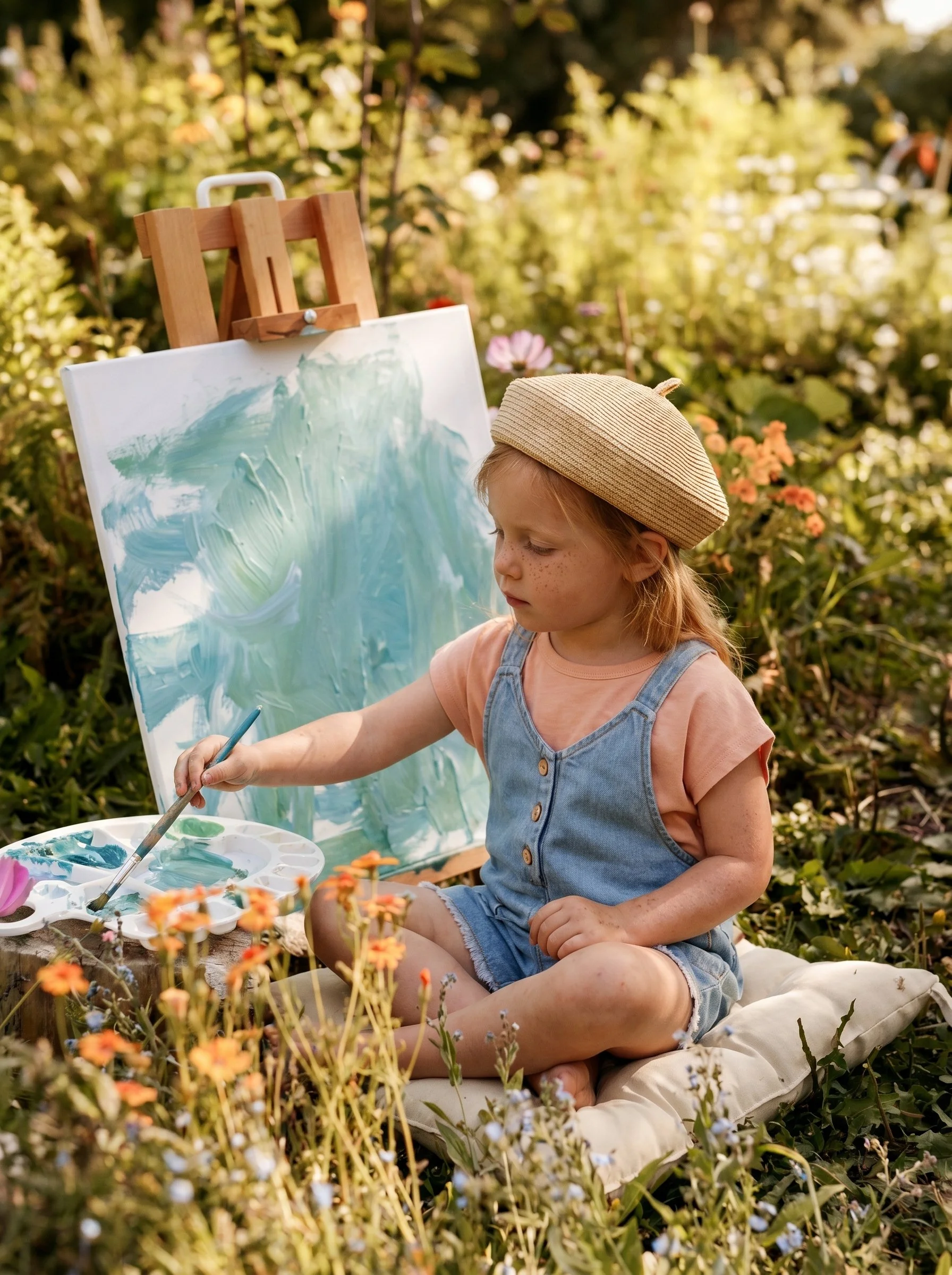
In practice, most everyday product and lifestyle imagery for a kids' brand is safe ground:
• Studio-style product shots of your item on a realistically-proportioned AI-generated baby or child
• Lifestyle scenes (nursery, park, bath time, playroom) that reflect how the product is actually used
• Seasonal campaign imagery (back-to-school, holiday, summer) as long as the product itself is depicted accurately
• Diverse representation of skin tones, family structures, and abilities — CARU explicitly encourages this, and it's good practice regardless of whether CARU's guidelines technically apply to your ad
• Product visualization for items still in production, clearly used as a design/marketing tool rather than a claim about a finished product
What's not safe to generate
• Images that use or closely mimic the actual likeness of a real, identifiable child without consent (this edges into right-of-publicity and, if it's a child influencer or public figure, potential legal exposure)
• Any image implying data was collected from or about a real child to create it
• Scenes that alter the product's real-world appearance, size, or function
• Imagery paired with copy that implies real user reviews, real safety testing, or clinical claims you can't substantiate
• Content designed to run as advertising that children themselves will view and be persuaded by (e.g., in a kids' game or app) without applying CARU's stricter standards
A quick pre-publish checklist
Before an AI-generated image goes live on your product page, ad, or listing, run it through five questions:
1. Does the product in the image match the real product exactly — color, shape, material, size?
2. Does the image or its caption imply anything about the product's function or safety that you haven't verified?
3. Is the child in the image fully synthetic, with no real, identifiable child's likeness used?
4. Does the imagery meet your specific marketplace's photo requirements (Amazon, Etsy, Walmart, etc.)?
5. If this ad will be seen and interpreted by children themselves (not just parents), have you checked it against CARU's guidelines specifically?
If you can answer all five confidently, you're on safe ground.
How Novii approaches this
We built Novii around the assumption that kids' and baby brands need to move fast and stay careful — the two aren't in tension if the imagery is done right. A few things we bake into every shoot:
• Every child in a Novii image is fully AI-generated — never a real child's likeness, and never built from any data collected about a real child.
• Product shape and detail are preserved exactly as submitted, so the accuracy question in the checklist above is handled by default, not left to chance.
• Every shoot goes through human creative direction, not a generic prompt-and-go pipeline, which is also how we catch anything that reads as misleading before it reaches your product page.
• With Your Brand Baby, your brand gets one consistent AI child model used only for you — never shared across other clients' catalogs — which also avoids any ambiguity about whose "likeness" is being used where.
If you're a baby or kids' brand weighing AI photography against your next studio shoot, this is exactly the kind of groundwork we've already done so you don't have to second-guess it shoot by shoot.
FAQ
Does COPPA apply to AI-generated product photos of babies or kids?
No. COPPA governs collection of personal data from real children by online services. A product photo featuring an AI-generated (not real) child doesn't involve data collection from a child, so COPPA doesn't apply to the image itself.
Do I need to disclose that a product photo was AI-generated?
There's no specific federal law requiring an "AI-generated" label on product photography today, but the safest practice is accuracy: if a reasonable customer would be misled about what they're receiving, disclose or adjust the image. Some marketplaces are introducing their own AI-content labeling rules, so check your specific platform's current policy.
Is it safe to use AI to generate images of children for marketing at all?
Yes, as long as the child is fully synthetic (not based on a real, identifiable child), the product is represented accurately, and — if the ad will be seen directly by children — you apply CARU's stricter advertising-to-kids guidelines.
Sources: BBB National Programs — CARU Compliance Warning on AI (2024), Federal Register — Children's Online Privacy Protection Rule (2025 Final Rule), Data Protection Report — FTC's COPPA Rule Changes Include AI Training Consent Requirement
